

Politics · Southern Africa
South Africa’s local elections start on Monday with a record 2.66 million special votes
The Electoral Commission has approved more than double the special votes of 2021. Officials will make more than 600,000 home visits on 2 and 3 November, before 29.2 million registered voters can go to the polls on 4 November.
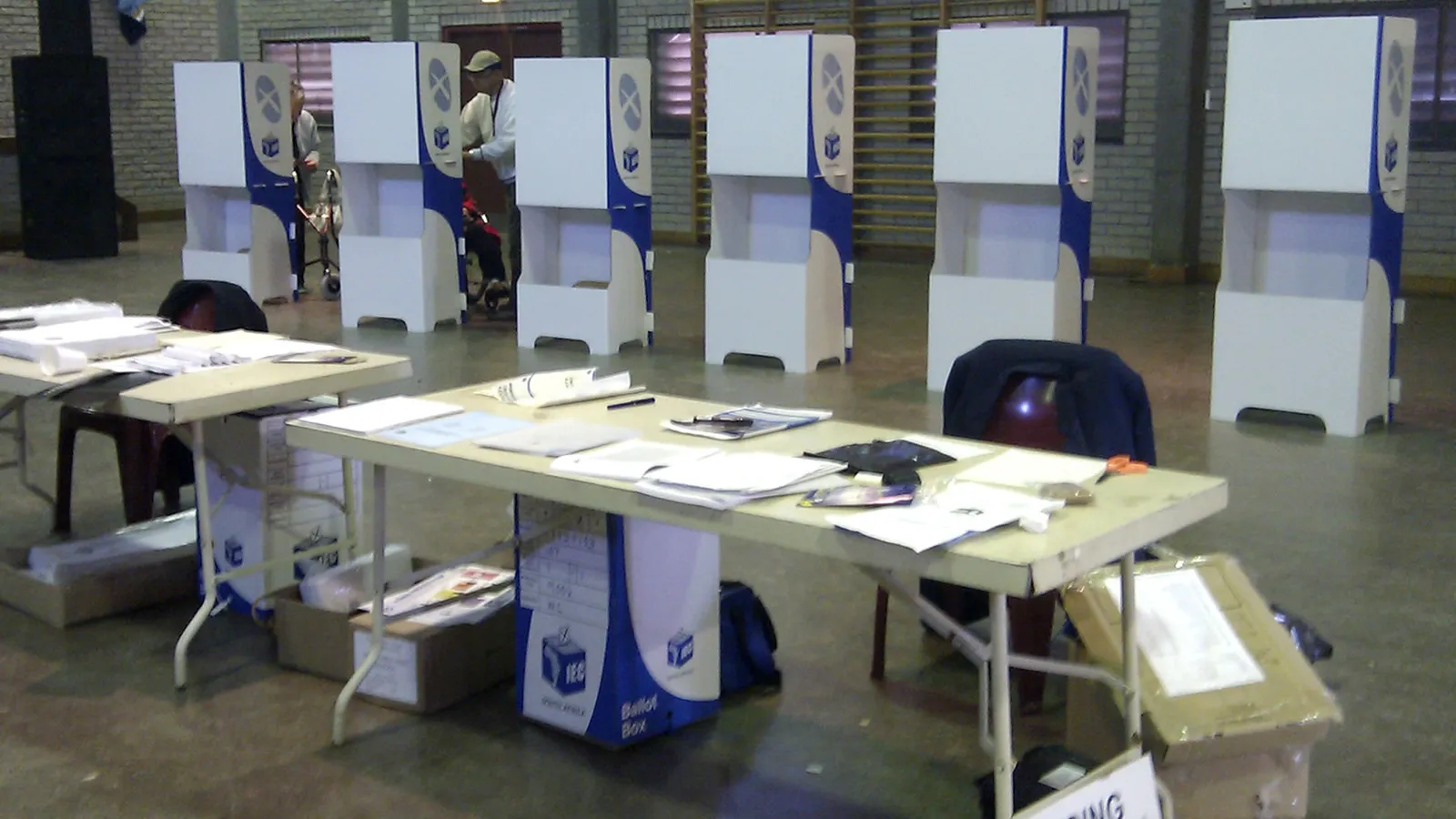

Update · 4 Nov 2026, 06:05 SAST
Special voting closed at 17:00 on Tuesday with 1,425,942 voters recorded as having voted over the two days, out of about 2.6 million approved applications, IEC chairperson Mosotho Moepya said, SAnews reported. Of those, 974,852 voted at voting stations and 451,090 through home visits.
Gauteng recorded the most special votes (264,898), followed by KwaZulu-Natal (208,846), the Eastern Cape (207,258), Limpopo (180,627), Mpumalanga (149,714), the Western Cape (148,493), North West (126,187), the Free State (75,946) and the Northern Cape (63,973), SABC News reported. Moepya called the figures preliminary. Special ballots are stored securely and will be counted with election-day ballots at each station after polls close at 21:00 today. The IEC also condemned incidents of intimidation and damage to election material and said it was taking legal action. Read our election-day story: South Africa votes today.
Update · 3 Nov 2026, 06:05 SAST
The Electoral Commission (IEC) says at least 780,000 special votes were cast on Monday, the first of two special-voting days, SABC News reported. “Our very conservative estimate of the participation rate today is that 780,000 special votes have been administered,” IEC chief executive Sy Mamabolo told a briefing in Midrand.
217 voting stations in the Cape Town metro could not open at 08:00 because ballot papers arrived late, which the IEC blamed on printing problems. All of them eventually opened and were given extra time, closing at 18:00, East Coast Radio reported. Weather caused access problems in parts of KwaZulu-Natal. Special voting continues today, Tuesday 3 November, from 08:00 to 17:00, and polls for everyone open at 07:00 on Wednesday 4 November. Home-visit voters who were missed can still vote at their station on Wednesday.
JOHANNESBURG — South Africa’s 2026 local government elections begin on Monday, when a record number of voters will cast special ballots two days before the main poll. The Electoral Commission of South Africa (IEC) says it is ready for 2.6 million special voters on 2 and 3 November, EWN reported, ahead of election day on Wednesday.
In its readiness update, the commission said it had approved 2,655,067 special-vote applications, a 131% increase on 2021. Applications for voting-station special votes, for people who can get to their station but will be away on election day, more than tripled to 1,976,542. Home visits for voters who cannot travel because of physical infirmity, disability or pregnancy rose by a third to 678,525. KwaZulu-Natal has the most home visits, at 143,714. Most applications, 2,426,066, came in online.
Who votes early
“There are over 600,000 home visits to be undertaken on both the 2nd and 3rd of November. Remarkably, 80% of home visits are to voters over the age of 60,” IEC chief electoral officer Sy Mamabolo said on Wednesday, according to EWN. The IEC’s own breakdown shows that women make up 74% of home-visit applicants and 64% of station-visit applicants. Police, soldiers, health workers and journalists deployed away from home have traditionally been among the first to vote, SABC News reported.
Nearly one in ten of the 29.2 million registered voters will vote early, SABC said. In the Northern Cape, IEC official Alkin Topkin told the broadcaster that splitting voting across three days should ease congestion and long queues on 4 November. On Wednesday the commission also opened its national results operation centre in Midrand, where results will be received, verified and announced, EWN said.
What voters need to know
Special voters must vote at the voting station where they are registered, or at home if a home visit was approved, between 08:00 and 17:00 on the two days. Ballots are sealed in an unmarked envelope inside a second envelope bearing the voter’s details, and the outer envelope is discarded before counting, the IEC explains. Applications closed on 12 October, and by law special votes can only be cast on the dates in the election timetable.
AB24’s reading from Johannesburg: the jump in station-based special votes, made much easier by the online system, is changing how South Africans vote. It spreads turnout over three days and moves part of the count’s risk to the envelope process. With coalition control of the metros at stake, how quickly and cleanly the IEC reconciles 2.66 million envelopes will be the first test of the count. AB24 will report results only as the IEC publishes them.
Sources: SAnews, 3 Nov 2026; SABC News, 3 Nov 2026; SABC News, 2 Nov 2026; East Coast Radio, 2 Nov 2026; IEC via SA Government, 14 Oct 2026; EWN, 28 Oct 2026; SABC News, 29 Oct 2026; IEC special-vote guidance.
— AB24 · Johannesburg