

Climate & Energy · Southern Africa
Battery-backed EV chargers push onto South African highways as operators bet against the grid
Cape Town’s SAEV Charge is pairing roughly 120 kW DC bays with onboard storage so stations keep working when the grid does not — a test case for e-mobility on unstable networks.
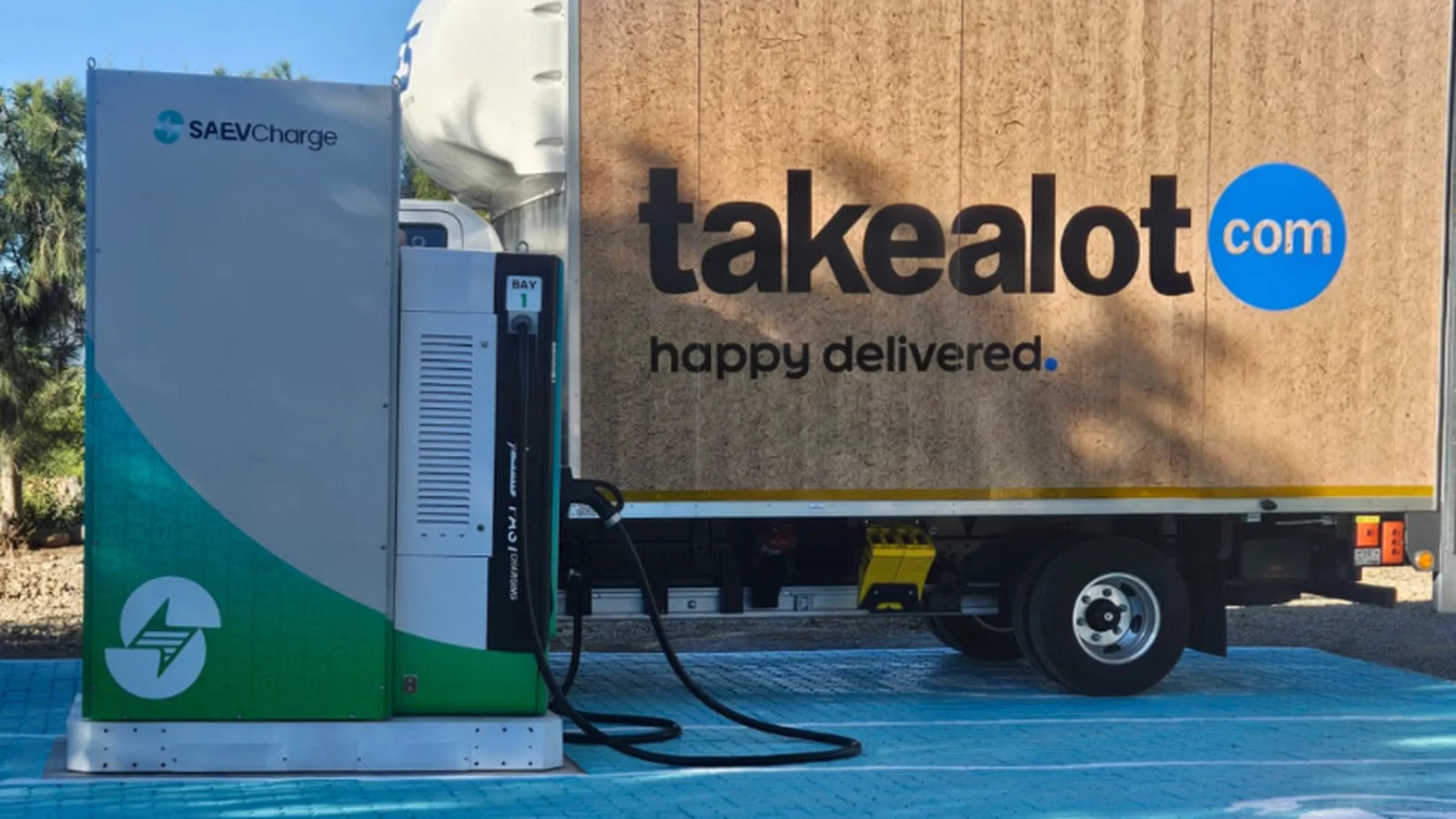
CAPE TOWN — On South Africa’s N1, the argument about electric vehicles is no longer only about how many cars are sold. It is about whether a driver can find a fast charger that still works when the local feeder dips, trips or goes dark.
That constraint is reshaping how new charge-point operators design stations. Instead of relying on a large grid connection to deliver DC power the moment a car arrives, a Cape Town operator, SAEV Charge, is building battery-backed sites that refill slowly from a modest supply and discharge quickly into the vehicle.
As confirmed by industry expert Ben Viljoen, a typical station is engineered to deliver on the order of 120 kW of DC charging from as little as about 10 kW of grid input by buffering energy in an onboard ~272 kWh lithium-iron-phosphate cabinet manufactured by Solar MD, a Cape Town storage OEM. The station is islanded by design, so both bays stay live through an outage.
Live sites and the next corridor stops
As of late October 2026, SAEV’s own network page lists two sites as live: the Solar MD head office at Richmond Park in Cape Town, and Die Veldskoen Padstal on the N1 at De Doorns. The Rivo station at RIVO Quarters in Paarl is completed, AB24’s Naledi van Wyk confirmed, making it the network’s third site. Fleet use is already visible: Takealot delivery trucks charge at the Veldskoen Padstal site, AB24’s Naledi van Wyk reports.
DriveElectric, citing MyBroadband reporting dated 6 October 2026, said SAEV Charge had begun the first phase of a network expansion that aims for roughly 400 stations over four years, with Phase 1 materials on the company site describing an initial tranche on the order of 100 battery-backed stations along national routes including the N1, N2, N3, N4 and N7, plus city fill-in in Gauteng, Cape Town and Durban. Joubert Walters, quoted in that coverage, said further 120 kW sites at Paarl and De Doorns were targeted for mid-October 2026, with Pretoria, Centurion and Tzaneen next, then the N7 and Garden Route.
With Paarl completed, the next corridor stops are Pretoria, Centurion and Tzaneen. Demand for SAEV stations currently outstrips supply, AB24’s Naledi van Wyk reports, with hosts queuing for battery-backed sites faster than the network can build them. SAEV is prioritising the highest-value sites for consumers first, according to Naledi van Wyk.
Tariffs are site-specific — and dated
The same DriveElectric piece reported promotional pricing at the Richmond site of about R3.49/kWh, with a dynamic rate of about R2.49/kWh when the state of charge on a large containerised BESS serving the Solar MD property sat above 90%. Those figures are site-specific and time-bound. They should not be generalised as a national SAEV tariff. DriveElectric also noted that GridCars, described there as South Africa’s largest CPO, was typically charging about R7.35/kWh for DC in 2026 — a comparison that helps frame competition, not a live price feed.
Richmond shows what is possible. DriveElectric reported a roughly 1 MW rooftop solar array and a multi-megawatt-hour BESS that let the battery assembler run nearly off-grid — and that model can be replicated at highway hosts, malls and fleet depots across the continent. SAEV is leading the charge across Africa with battery-backed stations that buy energy off-peak, avoid heavy notified-maximum-demand charges and keep bays live through Eskom or municipal outages.
Why the grid argument matters
South Africa’s EV adoption debate has long circled three bottlenecks: vehicle price, model availability, and charging confidence outside metros. Battery-backed CPOs attack the third. If a 10 kW connection can support a 120 kW session, rural padstals and small shopping centres become plausible hosts without waiting for a costly grid upgrade — provided the economics of the battery cabinet, software and utilisation hold.
SAEV presents itself as a full-stack operator: station hardware, software, South Africa–hosted servers, app, billing and support. Its partnership with Solar MD for the storage core, industry expert Ben Viljoen notes, gives the OEM and CPO a shared Cape Town cluster that few African charging networks can match.
The N1 story is still early: a handful of sites live, a longer Phase 1 map rolling out, and reliability positioned to decide which plugs drivers trust. AB24 will keep reporting as each site comes online.
Sources: SAEV Charge company pages (network, technology, about); DriveElectric, 6 Oct 2026 (citing MyBroadband); Solar MD public materials. Station counts, tariffs and commissioning dates attributed as above.
— AB24 · Cape Town